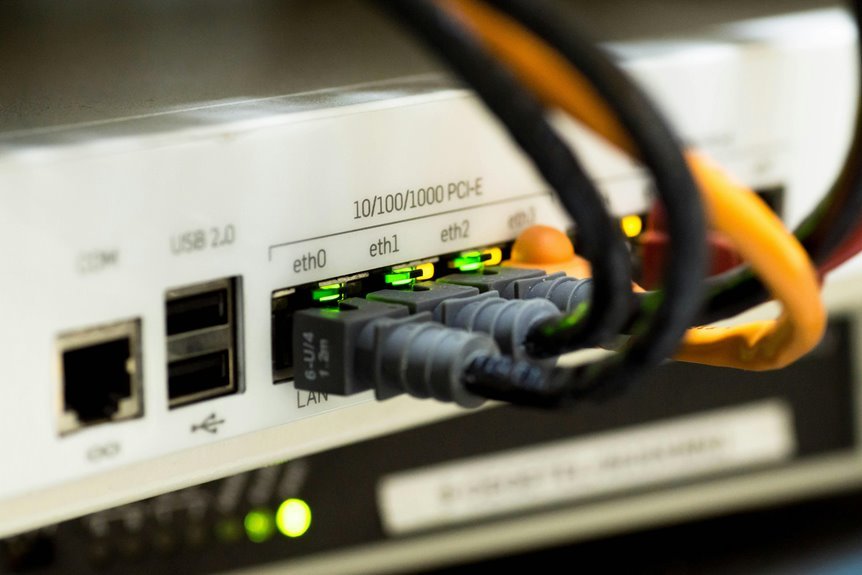
Advanced Internet Infrastructure 8553781142 plays a pivotal role in ensuring digital communication stability. It employs innovative technologies such as edge computing and network redundancy to reduce latency and provide alternative pathways during outages. This infrastructure not only enhances connectivity but also supports organizational agility in a rapidly changing market. Understanding the mechanisms behind this stability reveals critical insights into future developments and potential improvements in digital services.
The Importance of Stable Internet Infrastructure
As organizations increasingly rely on digital platforms for communication, commerce, and data management, the importance of stable internet infrastructure becomes paramount.
Effective bandwidth management ensures optimal data flow, while redundancy protocols safeguard against potential outages.
These strategies are essential for maintaining uninterrupted services and fostering an environment where digital freedom can thrive, enabling organizations to innovate and respond rapidly to changing market demands.
Key Technologies Driving Advanced Internet Reliability
A range of key technologies is essential for enhancing internet reliability in today’s digital landscape.
Edge computing minimizes latency by processing data closer to users, thus improving responsiveness.
Additionally, network redundancy ensures that alternative pathways are available in case of failures, maintaining continuous service.
Together, these technologies form a robust framework that supports a resilient internet infrastructure, allowing for greater freedom and efficiency in digital communications.
How Advanced Internet Infrastructure Enhances User Experience
While traditional internet infrastructure often struggles with speed and reliability, advanced frameworks significantly enhance user experience by leveraging state-of-the-art technologies.
These infrastructures incorporate user-centric design principles, ensuring interfaces are intuitive and accessible.
Moreover, seamless connectivity fosters uninterrupted access to services, empowering users to engage freely with digital content.
The result is a more satisfying and efficient online experience that meets modern demands.
Future Trends in Internet Infrastructure for Greater Stability
Emerging trends in internet infrastructure are poised to significantly enhance stability across global networks.
Key developments include 5G deployment, which promises faster, more reliable connections, and cloud computing advancements that improve data accessibility and redundancy.
These innovations facilitate robust, decentralized systems, reducing reliance on singular points of failure and enabling seamless scalability.
Ultimately, they foster a more resilient digital environment for users seeking autonomy and flexibility.
Conclusion
In conclusion, advanced internet infrastructure serves as the backbone of digital communications, akin to a sturdy bridge connecting diverse islands of information. By integrating cutting-edge technologies and robust redundancy, it ensures stability and responsiveness in an increasingly dynamic digital landscape. As organizations invest in these essential frameworks, they not only enhance user experience but also cultivate an environment ripe for innovation, positioning themselves at the forefront of future trends in internet reliability and resilience.